Tools
Knowing what to do isn't the problem. Starting is.

Elisa Hausner
20 September 2026
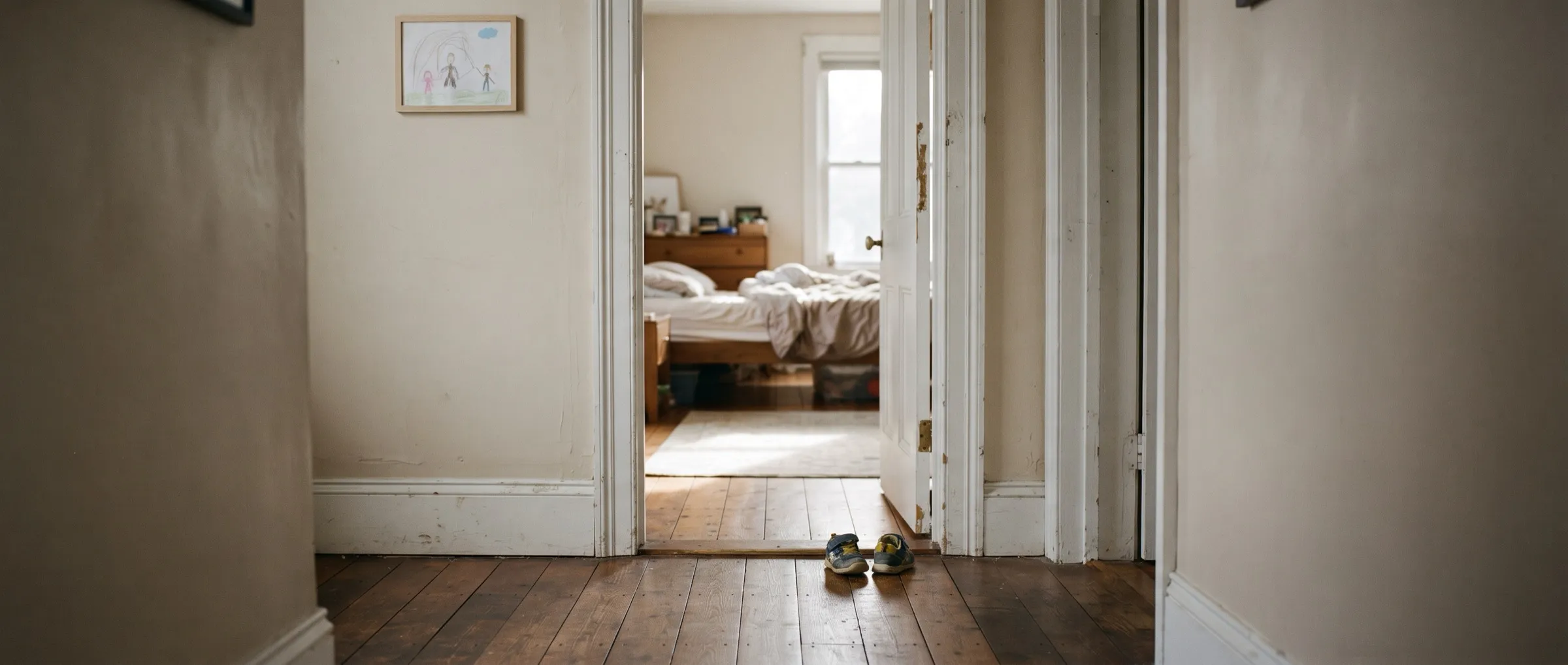
There’s a version of you that knows exactly what needs doing. It’s been awake since about seven. It knows about the email, the form, the twenty minutes the kitchen always needs. It has thought about all of it in detail, more than once, possibly with a small internal speech about how today will be different.
Then there’s the version of you that has to stand up.
If those feel like two different people, you don’t have a motivation problem. You have a doorway problem.
The first thirty seconds cost more than the next hour
Think about the last thing you finally did after avoiding it. Once you were inside it — file open, sponge in hand — it was probably fine. Sometimes easy. The awful part was the wall in front of it.
That’s not a personal failing, and the research is fairly clear about why. Reviewing over 600 studies on procrastination, Piers Steel found the two biggest drivers are how unpleasant a task feels and how far away its reward sits. That’s true of people generally. An ADHD brain turns both dials up: dull tasks feel worse, because the reward system under-signals for things that are merely important rather than interesting, and distant rewards shrink faster — what researchers call delay aversion.
So the start line is where two forces meet. The task looks worse than it is, and the reason to do it is too far away to feel. It’s closer to physics than character.
Which points at the way through. If the cost is concentrated in the start, shrink the start.
A doorway isn’t a first step
A doorway action is the smallest physical movement that puts you inside a task. Not the first step — steps are still tasks. A doorway is the thing your body does that means you’re no longer outside.
Three rules make a good one:
- It’s physical. Your hands or feet do something. “Think about the email” isn’t a doorway. “Open the email and type their name” is.
- It takes two minutes or less. Usually much less. If it takes five, it’s a step. Shrink it again.
- There’s no decision inside it. The doorway for tax is “open the folder”, not “work out which receipts are missing”. Deciding is the thing you’re avoiding. The doorway must not contain any.
What that looks like:
| Stuck task | Still a task | A doorway |
|---|---|---|
| Answer that email | Reply to Sarah | Open it, type “Hi Sarah,” and nothing else |
| Clean the kitchen | Do the dishes | Run the hot tap, put one plate in the sink |
| Do the tax return | Sort the receipts | Put the folder on the table, open it to page one |
| Make the appointment | Call the dentist | Find the number, write it on a sticky note |
| Go for a walk | Go for a walk | Put your shoes on, sitting down |
If you read the right-hand column and thought “well, that’s nothing” — good. That’s the size we want. It’s supposed to feel like nothing, because nothing is a price you can pay on a bad day.
Two things then happen without you
First, you’re inside, and momentum is cheaper than starting. When people are interrupted mid-task, they tend to come back and finish — a review of nearly a century of that research puts it at around two-thirds of the time. The pull to finish something already begun is real. This uses it on purpose.
Second, because you decided the doorway in advance, you’re not deciding now. Gollwitzer and Sheeran reviewed 94 studies of if-then plans — “when I sit down with my coffee, I open the tax folder” — and found a solid effect on whether people actually did the thing. Fewer decisions at the moment of starting, which is exactly when deciding is hardest.
Write the card
A doorway you thought about once doesn’t survive a bad morning. Write it down, with two extra lines:
- The cue — when you’ll do it, pinned to something that already happens. “When I put the kettle on.” “When the 1pm meeting ends.”
- Where the card lives — the exact spot you’ll see it at the moment the cue happens.
The one from our house is the school newsletter, the email with the permission slips and the date you were meant to note three weeks ago. The doorway isn’t “read it” or “action it”. It’s scroll to the bottom. Most mornings, having scrolled, the eyes catch the date that matters and the hand puts it in the calendar before the brain objects.
Some mornings that doesn’t happen and the scroll is all there is. That still counts. The card did its job. It got us to the door.
Blank Doorway Cards are free to print, in A4 and US Letter, at elisahausner.com/toolkit — no email needed.
This is chapter one of The ADHD Motivation Toolkit, which is out now in paperback. There are seven more tools in it, and a one-page plan for the days when none of them appeal.